
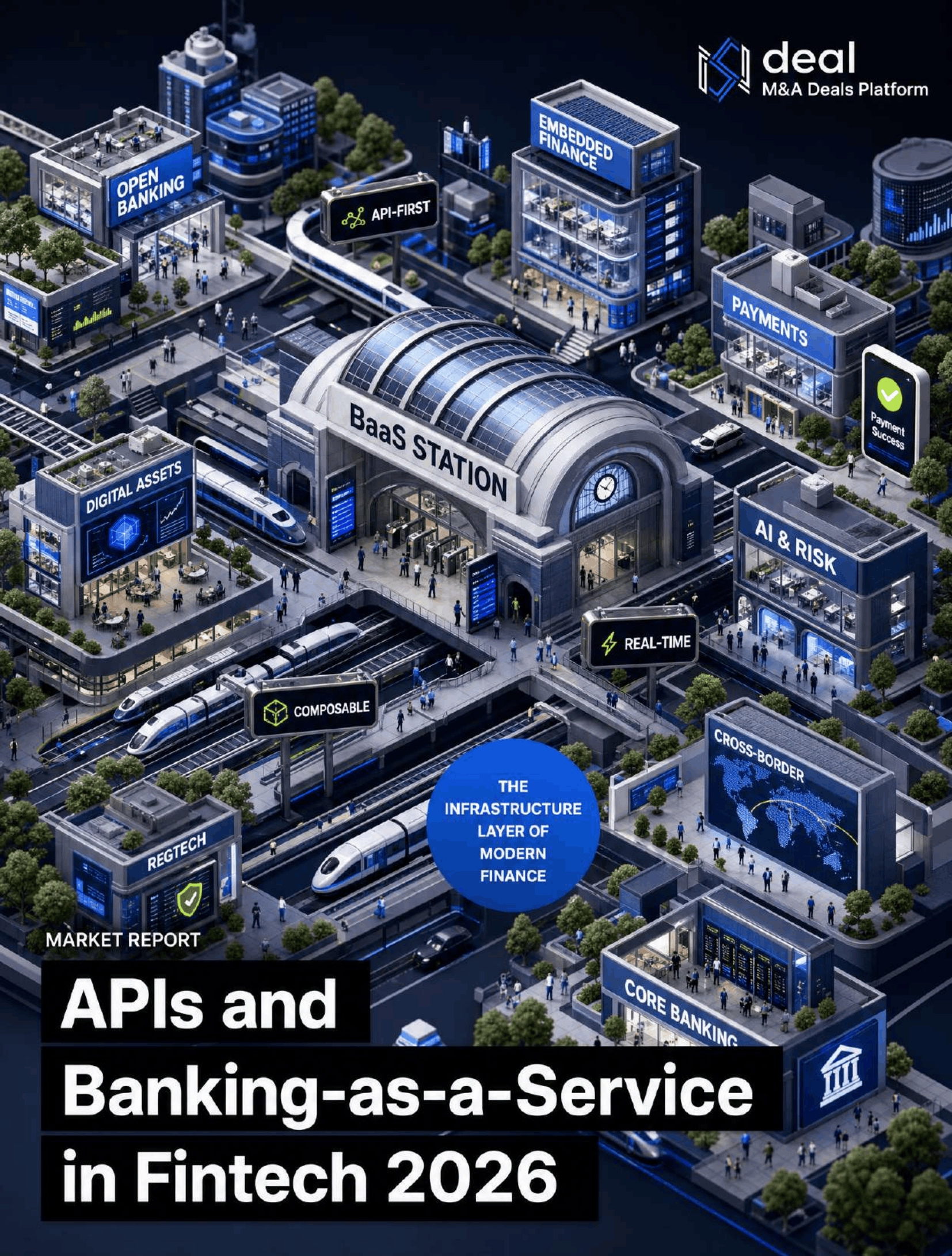
Having APIs is no longer the difficult part. What a buyer has to establish is how those APIs are governed, monitored and combined into customer journeys that hold up when a provider fails, a policy changes or a new jurisdiction is added.
This report covers that ground across twelve capability domains, two operating models, three stages of API maturity and five elements of a durable financial platform. It reads the market through three lenses: structural, commercial and regulatory. It is written for buyers assessing a BaaS provider, an orchestration platform or a licensed entity attached to one.
From cost centre to distribution layer
A bank's stack holds seven layers: customer experience, product and distribution, operations and support, KYC/AML and fraud, payments, cards and accounts, core banking and ledger, and licence, governance and data. BaaS distributes the lower layers outward through governed APIs to fintechs, SaaS platforms, marketplaces and commerce brands, which then sell accounts, payments and cards inside their own products.
What sits underneath decides whether that works: an API gateway, event streams, identity and security, observability and monitoring, and the secure cloud environment beneath them. Licensing, risk controls and ledger integrity stay inside the operating model. An incumbent can compete with the new digital players for the customer, or become the infrastructure those players build on.
Download the report
to view the full version.