
Discover why financial podcasts are gaining popularity, check out the 10 best financial podcasts. Some tips on which finance podcast is best for you
Key Takeaways
Financial podcasts offer convenient, on-demand access to expert insights and market analysis during commutes, workouts, or daily routines
The podcast format allows for in-depth conversations and nuanced discussions that written content often can't capture
Top financial podcasts in 2025 cover diverse topics from personal finance and investing to macroeconomics and market trends
Choosing the right podcast depends on your experience level, interests, and preferred format (interview-style, news briefings, or educational)
Regular podcast listening can significantly improve financial literacy and help you make more informed money decisions
Why Do We Choose the Finance Podcast Format?
Financial podcasts have become one of the most popular ways to consume financial information in 2025, and for good reason. The podcast medium offers unique advantages that traditional financial media simply cannot match. According to Edison Research, over 60% of adults now listen to podcasts regularly, with business and finance categories showing the strongest growth rates.
The convenience factor makes podcasts particularly appealing for busy professionals. Unlike reading articles or watching videos that require your full attention, podcasts integrate seamlessly into your daily routine. You can absorb valuable financial insights while commuting, exercising, cooking, or doing household chores. This multitasking capability transforms otherwise unproductive time into learning opportunities, making financial education accessible even for those with packed schedules.
Key Benefits of Financial Podcasts:
Convenience and flexibility - Listen during commutes, workouts, or household chores without requiring full attention
In-depth exploration - 30-60 minute episodes allow thorough discussion of complex topics
Expert access - Regular interviews with billionaire investors, economists, and industry leaders
Personal connection - Conversational format builds trust and makes advice more relatable
Adaptable learning - Content available for all experience levels from beginner to advanced
Podcasts excel at delivering depth and nuance that shorter content formats struggle to provide. A typical financial podcast episode runs 30 to 60 minutes, allowing hosts to explore topics thoroughly, ask follow-up questions, and dive into complexities that a 500-word article must gloss over. This extended format enables listeners to truly understand financial concepts rather than just scratching the surface.
The conversational nature of podcasts makes complex financial topics more approachable and engaging. Hearing experts discuss markets, investments, and economic trends in natural conversation feels less intimidating than reading dense financial reports or academic papers. Many listeners report that podcast discussions help them grasp concepts they previously found confusing when presented in written form.
Financial podcasts provide access to world-class expertise that would otherwise be unavailable to most people. Top podcasts regularly feature interviews with billionaire investors, central bank officials, Nobel Prize-winning economists, and successful entrepreneurs. These conversations offer insights and perspectives that you'd typically only access by attending exclusive conferences or working in elite financial institutions.
The audio format also creates a sense of personal connection between hosts and listeners. Regular podcast listeners often feel they know the hosts personally, which builds trust and makes financial advice feel more relatable. This parasocial relationship can be particularly valuable when navigating the often-intimidating world of personal finance and investing.
Podcasts adapt to different learning styles and experience levels. Whether you're a complete beginner seeking basic financial literacy or an experienced investor looking for advanced market analysis, there's a podcast tailored to your needs. Many shows offer different series or episodes targeting specific audience segments, allowing you to find content that matches your current knowledge level.
Top 10 Financial Podcasts in 2025
1. The Indicator from Planet Money
This daily podcast from NPR delivers quick, digestible explanations of economic news and trends in just 10 minutes. The Indicator excels at making complex economic concepts accessible through storytelling and real-world examples. Perfect for busy professionals who want to stay informed without committing to hour-long episodes, this podcast covers everything from inflation and interest rates to labor markets and global trade. The hosts' engaging style and ability to find the human story behind economic data make dry statistics come alive.
2. Masters in Business
Hosted by Bloomberg's Barry Ritholtz, Masters in Business features in-depth interviews with the most influential figures in finance, investing, and business. Each episode runs about an hour and provides deep insights into the thinking, strategies, and career paths of successful investors, entrepreneurs, and thought leaders. Ritholtz's thorough preparation and thoughtful questions elicit candid responses that reveal how top performers actually think about markets and decision-making. This podcast is invaluable for anyone seeking to learn from the best in the business.
3. Invest Like the Best
Patrick O'Shaughnessy hosts this podcast featuring conversations with investors, entrepreneurs, and thought leaders about their investment philosophies and decision-making frameworks. The show stands out for its intellectual depth and O'Shaughnessy's ability to extract actionable insights from diverse perspectives. Episodes explore not just what successful people do, but why they do it and how they think about risk, opportunity, and building wealth. The podcast appeals to serious investors who want to refine their own investment approach by learning from proven practitioners.
4. The Clark Howard Podcast
Consumer advocate Clark Howard has been helping people save money and avoid scams for decades, and his podcast continues this mission with practical, actionable advice. The show focuses on personal finance fundamentals like budgeting, saving, smart shopping, and protecting yourself from fraud. Howard's straightforward, no-nonsense approach makes this podcast ideal for anyone looking to improve their day-to-day financial decisions. The emphasis on consumer protection and money-saving strategies provides immediate value that listeners can implement right away.
5. Motley Fool Money
The Motley Fool's flagship podcast offers weekly analysis of market news, company earnings, and investment opportunities. The show features a panel of analysts discussing the week's biggest business stories with humor and insight. What sets Motley Fool Money apart is its focus on long-term investing principles and individual stock analysis rather than short-term trading. The hosts break down complex business models and competitive dynamics in ways that help listeners become better investors. Regular segments on stocks to watch and investment mistakes to avoid provide practical guidance.
6. The Ramsey Show
Dave Ramsey's call-in show has helped millions of people get out of debt and build wealth through his straightforward, sometimes controversial advice. The podcast format allows listeners to hear real people's financial struggles and Ramsey's direct guidance on tackling debt, budgeting, and building emergency funds. While his approach isn't for everyone, the show's emphasis on behavioral change and financial discipline resonates with those seeking to transform their relationship with money. The real-life caller stories provide both inspiration and cautionary tales.
7. Odd Lots
Bloomberg's Odd Lots, hosted by Tracy Alloway and Joe Weisenthal, explores the most interesting and unusual corners of finance and economics. The podcast goes beyond mainstream financial news to investigate emerging trends, market anomalies, and the forces shaping the global economy. Episodes feature expert guests discussing topics like supply chains, cryptocurrency, housing markets, and monetary policy with depth and nuance. Odd Lots appeals to listeners who want to understand the "why" behind market movements and economic developments.
8. Animal Spirits
Michael Batnick and Ben Carlson host this weekly podcast discussing market news, investor behavior, and personal finance with refreshing honesty and humor. Animal Spirits stands out for its balanced perspective, acknowledging both the rational and emotional aspects of investing. The hosts share their own experiences and mistakes, making the content relatable and authentic. Topics range from portfolio construction and retirement planning to behavioral finance and market history. The conversational format feels like listening to knowledgeable friends discuss money over coffee.
9. We Study Billionaires
The Investor's Podcast Network's flagship show features two distinct series: one focused on value investing and Warren Buffett's principles, the other on Bitcoin and cryptocurrency. Both series feature high-quality interviews with successful investors, authors, and industry experts. The show's deep dives into investment strategies, company analysis, and market philosophy provide substantial educational value. Whether you're interested in traditional value investing or digital assets, We Study Billionaires offers rigorous analysis and thoughtful discussion.
10. Planet Money
NPR's Planet Money makes economics entertaining and accessible through creative storytelling and investigative journalism. Each episode explores economic concepts through real-world stories, experiments, and investigations. The show has covered everything from starting a company to understanding global trade, always finding the human element in economic systems. Planet Money's ability to make economics fun and relevant has introduced countless listeners to economic thinking. The podcast proves that understanding economics doesn't require a degree—just curiosity and good storytelling.
How to Choose Finance Podcasts for Yourself?
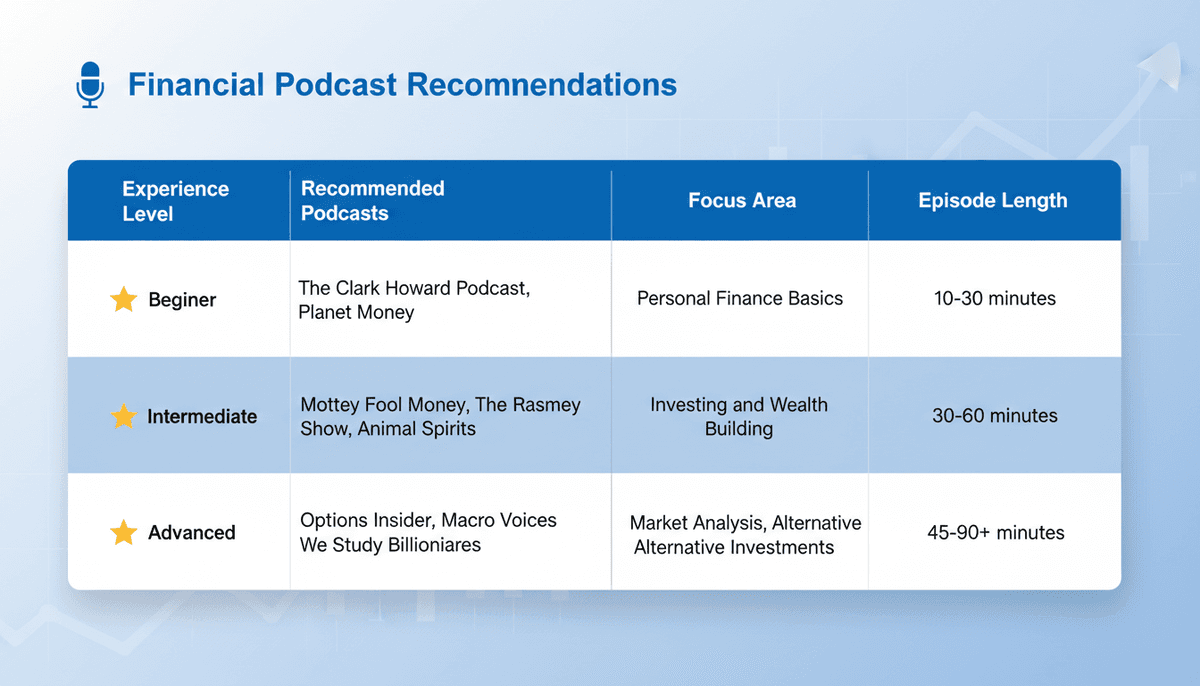
Selecting the right financial podcasts requires considering several key factors that align with your goals, interests, and learning preferences. Your current financial knowledge level should guide your initial choices. Beginners benefit from podcasts that explain fundamental concepts without assuming prior knowledge, like The Clark Howard Podcast or Planet Money. Intermediate listeners might prefer shows that balance education with market analysis, such as Motley Fool Money. Advanced investors often gravitate toward in-depth discussions found in Masters in Business or Invest Like the Best.
Essential Factors When Selecting Podcasts:
Your knowledge level - Match content difficulty to your current financial literacy
Content focus - Choose between personal finance, investing, or macroeconomics based on your goals
Episode format - Decide between interviews, news analysis, educational lessons, or call-in shows
Time commitment - Consider daily 10-minute updates versus weekly hour-long deep dives
Host credibility - Verify credentials, track records, and regulatory compliance
Content focus matters significantly when choosing podcasts. Some shows emphasize personal finance topics like budgeting, debt reduction, and saving strategies. Others concentrate on investing, market analysis, and wealth building. Still others explore macroeconomics, policy, and global financial trends. Identify which areas most interest you or where you need the most improvement, then seek podcasts specializing in those topics. Many listeners subscribe to multiple podcasts covering different aspects of finance to create a well-rounded education.
Format preferences influence how much you'll enjoy and learn from a podcast. Interview-style shows feature conversations with guests, offering diverse perspectives and deep expertise on specific topics. News and analysis podcasts provide regular updates on market developments and economic trends. Educational podcasts teach specific concepts or skills through structured lessons. Call-in shows let you hear real people's financial questions and expert responses. Try different formats to discover which style keeps you engaged and helps information stick.
Episode length and frequency affect whether a podcast fits your lifestyle. Daily shows like The Indicator provide quick updates perfect for short commutes. Weekly podcasts offer more comprehensive coverage without overwhelming your schedule. Longer episodes suit listeners who want deep dives during extended activities like long drives or weekend workouts. Consider your available listening time and how often you want new content when selecting podcasts.
Host credibility and expertise ensure you're receiving quality information. Research the hosts' backgrounds, credentials, and track records. Established financial journalists, certified financial planners, successful investors, and respected economists typically provide more reliable guidance than self-proclaimed "gurus" without verifiable expertise. Read reviews and listen to a few episodes to assess whether the host's knowledge and presentation style resonate with you.
Production quality impacts your listening experience. Well-produced podcasts with clear audio, good editing, and thoughtful structure make learning more enjoyable. Poor audio quality, excessive ads, or disorganized content can make even valuable information difficult to absorb. Most major podcasts maintain high production standards, but it's worth sampling episodes before committing to a subscription.
Alignment with your values and investment philosophy matters for long-term engagement. Some podcasts advocate aggressive investing strategies, while others emphasize conservative approaches. Some focus on passive index investing, others on active stock picking. Choose shows whose fundamental philosophy aligns with your own beliefs about money and risk, or deliberately seek out different perspectives to challenge your thinking.
Conclusion
Financial podcasts have revolutionized how we learn about money, markets, and economics. The convenience, depth, and accessibility of this format make financial education available to anyone with a smartphone and curiosity. Whether you're just beginning your financial journey or you're a seasoned investor seeking new perspectives, there's a podcast that can help you achieve your goals.
The ten podcasts highlighted in this article represent some of the best financial content available in 2025, but they're just the beginning. The podcast ecosystem continues to grow and evolve, with new shows launching regularly to serve increasingly specific niches and interests. The key is to start listening, experiment with different shows, and build a rotation of podcasts that inform, challenge, and inspire you.
If you haven't yet incorporated financial podcasts into your routine, now is the perfect time to start. Download a few episodes from the shows that sound most interesting, listen during your next commute or workout, and see how this format can transform your financial knowledge. The investment of time you make in listening to quality financial podcasts will pay dividends in better financial decisions, increased confidence, and ultimately, improved financial outcomes.
Remember that consuming financial content, whether through podcasts, articles, or videos, is just the first step. The real value comes from applying what you learn to your own financial situation. Use the insights and strategies you discover through podcasts to inform your decisions, but always consider your unique circumstances and consult with qualified financial professionals when making significant financial choices.
Disclaimer
This article provides information about financial podcasts for educational purposes and should not be considered financial advice. Podcast content represents the opinions of hosts and guests and may not be suitable for your individual circumstances. Always conduct your own research and consider consulting with qualified financial professionals before making investment or financial decisions.
Comments
Frequently Asked Questions
Clear, concise info to help you understand the process!