

Is crypto really dead in 2025? Find out how Bitcoin and other cryptocurrencies are evolving, what's changing in the market, and what's next for the future of crypto.
Key Takeaways
The crypto market is experiencing a transformation phase, not a death spiral, with institutional adoption continuing to grow
Bitcoin remains the dominant cryptocurrency despite volatility, with major companies and countries integrating it into their financial systems
Regulatory clarity in 2025 is reshaping the industry, creating more stable conditions for long-term growth
New use cases in DeFi, NFTs, and blockchain technology demonstrate crypto's expanding real-world applications
Market cycles are normal in crypto history, with previous "crypto winters" followed by significant recoveries
Current State of the Crypto Market
The crypto market in 2025 is far from dead, though it looks dramatically different from the speculative frenzy of previous bull runs. After experiencing significant volatility throughout 2024, the market has entered a maturation phase characterized by increased institutional participation, clearer regulatory frameworks, and more sustainable business models.
The term "crypto winter" describes periods when cryptocurrency prices decline significantly and market enthusiasm wanes. While 2024 saw considerable price corrections, calling crypto dead ignores the fundamental developments happening beneath surface-level price movements. Market capitalization, though lower than peak levels, remains substantial, with Bitcoin alone maintaining a market cap exceeding hundreds of billions of dollars according to CoinMarketCap.
Several factors contributed to recent price declines. Regulatory uncertainty in major markets created hesitation among investors and businesses. Macroeconomic conditions, including rising interest rates and inflation concerns, pushed investors toward traditional safe-haven assets. High-profile exchange failures and security breaches damaged public confidence. These challenges, while significant, represent growing pains rather than fatal flaws in the cryptocurrency concept.
Despite price volatility, on-chain metrics tell a more nuanced story. Bitcoin's hash rate, which measures network security and miner participation, has remained near all-time highs. Daily active addresses across major blockchains show sustained user engagement. Development activity on leading blockchain platforms continues at robust levels, indicating ongoing innovation and improvement.
Key Indicators of Market Health in 2025:
Bitcoin hash rate - Remains near all-time highs, indicating strong network security
Daily active addresses - Sustained user engagement across major blockchains
Development activity - Robust innovation continues on leading platforms
Institutional participation - Growing involvement from major financial institutions
Market capitalization - Stabilized at levels significantly higher than early years
The current market state reflects a shift from speculation to utility. Projects focused on solving real problems and delivering tangible value are attracting investment and user adoption, while purely speculative tokens struggle. This natural selection process strengthens the overall ecosystem by filtering out unsustainable projects and rewarding genuine innovation.
What's Happening with Bitcoin and Other Major Cryptocurrencies?
Bitcoin continues to dominate the cryptocurrency landscape, accounting for approximately 50% of total crypto market capitalization. Far from being dead, Bitcoin has achieved significant milestones in 2025. Several countries have integrated Bitcoin into their financial systems, either as legal tender or as part of national reserves. Major financial institutions now offer Bitcoin custody services, investment products, and trading platforms to their clients.
Major Cryptocurrency Developments in 2025:
Bitcoin - Lightning Network expansion, Taproot upgrades, institutional custody services
Ethereum - 99% energy reduction via proof-of-stake, thousands of active dApps
Solana - High-speed transactions attracting consumer applications
Cardano - Academic-focused development emphasizing sustainability
Ripple (XRP) - Cross-border payment partnerships with financial institutions
The Bitcoin network has undergone important technical improvements. The Lightning Network, a second-layer solution for faster and cheaper transactions, has expanded significantly, making Bitcoin more practical for everyday payments. Taproot upgrades have enhanced privacy and smart contract capabilities. These developments address previous criticisms about Bitcoin's scalability and functionality.
Ethereum, the second-largest cryptocurrency, has solidified its position as the leading smart contract platform. The transition to proof-of-stake consensus has reduced energy consumption by over 99%, addressing environmental concerns that previously plagued the industry. Ethereum's ecosystem hosts thousands of decentralized applications, from financial services to gaming platforms, demonstrating practical utility beyond speculative trading.
Other major cryptocurrencies are carving out specific niches. Solana has gained traction for high-speed transactions and lower fees, attracting developers building consumer-facing applications. Cardano continues methodical development with academic rigor, focusing on sustainability and scalability. Ripple's XRP, despite regulatory challenges, maintains partnerships with financial institutions for cross-border payments.
The narrative that crypto is dead ignores these fundamental developments. While some cryptocurrencies have failed, the strongest projects are evolving, improving, and finding real-world applications. The market is maturing from a speculative casino into a legitimate technology sector with diverse use cases and growing adoption.
Insights on the Future of Cryptocurrencies
Expert predictions for cryptocurrency's future vary widely, but most serious analysts see continued growth and integration into mainstream finance. Gartner research suggests that by 2027, over 20% of large enterprises will use digital currencies for payments, up from less than 5% in 2023. This institutional adoption provides a foundation for long-term stability and growth.
The crypto industry is adapting to changing market conditions through several key strategies. Regulatory compliance has become a priority, with leading exchanges and platforms working closely with regulators to establish clear frameworks. This cooperation, while sometimes controversial within the crypto community, creates legitimacy and reduces uncertainty for institutional investors.
Interoperability between different blockchains is improving through cross-chain bridges and protocols. This development allows assets and data to move seamlessly between networks, creating a more connected and efficient ecosystem. As blockchains become more interoperable, the entire industry benefits from network effects and reduced fragmentation.
Real-world asset tokenization represents a significant growth opportunity. Real estate, commodities, art, and even traditional securities are being represented as blockchain tokens, enabling fractional ownership, improved liquidity, and more efficient trading. This trend bridges traditional finance with crypto innovation, potentially unlocking trillions of dollars in value.
Central Bank Digital Currencies (CBDCs) are being developed by governments worldwide, validating the underlying blockchain technology while creating competition for private cryptocurrencies. Rather than killing crypto, CBDCs may accelerate digital currency adoption and create infrastructure that benefits the entire ecosystem.
Which Myths About Cryptocurrencies Are False?
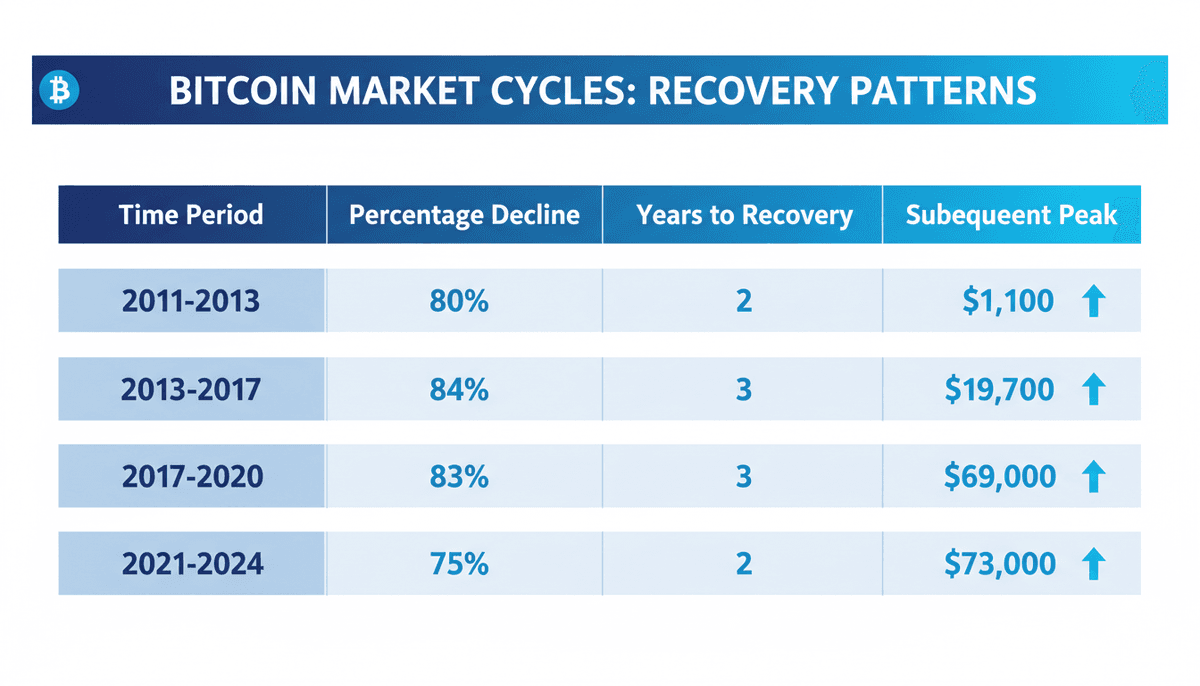
The myth that crypto is dead resurfaces during every market downturn, yet the industry has repeatedly proven resilient. Bitcoin has been declared "dead" over 400 times since its creation, according to 99Bitcoins, yet it continues to function and grow. This pattern suggests that price volatility doesn't equal technological failure.
Another false narrative claims cryptocurrencies have no real use cases. In reality, crypto enables financial services for billions of unbanked people worldwide. It facilitates fast, low-cost international remittances. It powers decentralized finance platforms offering lending, borrowing, and trading without traditional intermediaries. It enables digital ownership verification through NFTs, with applications in art, gaming, and intellectual property.
The belief that crypto is purely speculative ignores the substantial infrastructure being built. Major technology companies are integrating blockchain technology into their operations. Traditional financial institutions are developing crypto services. Governments are exploring and implementing blockchain solutions for identity management, supply chain tracking, and public records.
Long-term cryptocurrency investment has historically rewarded patient holders despite significant volatility. Bitcoin's price has increased exponentially over its lifetime, despite multiple 80%+ drawdowns. Ethereum has delivered substantial returns to early adopters. While past performance doesn't guarantee future results, the pattern suggests that dismissing crypto during downturns has been premature.
The myth that crypto will be banned by governments overlooks the practical challenges and economic incentives. Banning crypto would require unprecedented international coordination and would likely prove unenforceable given the technology's decentralized nature. Instead, most governments are pursuing regulatory frameworks that allow innovation while protecting consumers.
How Cryptocurrencies Are Evolving in 2025
Cryptocurrency market capitalization has stabilized after previous volatility, with total market cap maintaining levels that would have seemed impossible just a few years ago. This stability reflects maturation and the entry of long-term institutional investors who provide price support during downturns.
Crypto applications are expanding across diverse industries. Supply chain management uses blockchain for transparency and authenticity verification. Healthcare organizations are exploring blockchain for secure medical records. Gaming companies are integrating crypto and NFTs for true digital ownership. Real estate transactions are being streamlined through smart contracts and tokenization.
New platforms and protocols continue to emerge, addressing limitations of earlier blockchain generations. Layer-2 solutions improve scalability without sacrificing security. Zero-knowledge proof technology enhances privacy while maintaining transparency where needed. Decentralized identity solutions give users control over their personal data.
Investment in crypto companies has evolved from speculative venture capital to strategic partnerships with established corporations. Major banks, payment processors, and technology companies are acquiring crypto startups or building in-house capabilities. This corporate involvement brings resources, expertise, and legitimacy to the industry.
The developer community remains vibrant and growing. Blockchain developer numbers have increased steadily, with major technology companies recruiting crypto talent. Open-source development on leading blockchain projects shows consistent activity, indicating ongoing innovation and improvement.
Are Cryptocurrencies Dead or Alive?
Current trends clearly indicate that cryptocurrencies are very much alive and evolving. The market has moved beyond the early speculative phase into a period of consolidation and practical application. While this transition involves volatility and uncertainty, it represents healthy maturation rather than terminal decline.
Perspectives and risks for investors in 2025 require balanced consideration. Cryptocurrency remains a high-risk, high-reward asset class with significant volatility. Regulatory changes can impact prices dramatically. Technology risks, including security vulnerabilities and competing platforms, create uncertainty. However, the potential for substantial returns and portfolio diversification attracts sophisticated investors willing to accept these risks.
Investors making decisions in 2025 should consider several factors. Regulatory clarity has improved in many jurisdictions, reducing some uncertainty. Institutional adoption provides more stable demand. Technology improvements address previous limitations. However, market timing remains difficult, and cryptocurrency should represent only a portion of a diversified portfolio appropriate to individual risk tolerance.
Looking ahead five years, cryptocurrencies will likely become more integrated into mainstream financial systems. Payment networks may incorporate crypto rails for faster, cheaper transactions. Traditional assets may be widely tokenized on blockchains. Central bank digital currencies may coexist with private cryptocurrencies, each serving different purposes. The technology will likely become less visible to end users, embedded in applications and services they use daily.
The question isn't whether crypto is dead, but rather how it will evolve and integrate into the broader financial ecosystem. The technology has proven resilient through multiple cycles, and the fundamental value propositions of decentralization, transparency, and programmable money remain compelling.
Disclaimer
This article provides educational information about cryptocurrency markets and should not be considered investment advice. Cryptocurrency investments carry significant risks, including the potential loss of your entire investment. Market conditions can change rapidly, and past performance does not guarantee future results. Always conduct thorough research and consider consulting with qualified financial advisors before making investment decisions.
Comments
Frequently Asked Questions
Clear, concise info to help you understand the process!